Daily Living · National
How Do I Keep My Entryway Free of Trip Hazards?

Rachel Nguyen, OTR/LOct 24, 2026 · National
The short answer
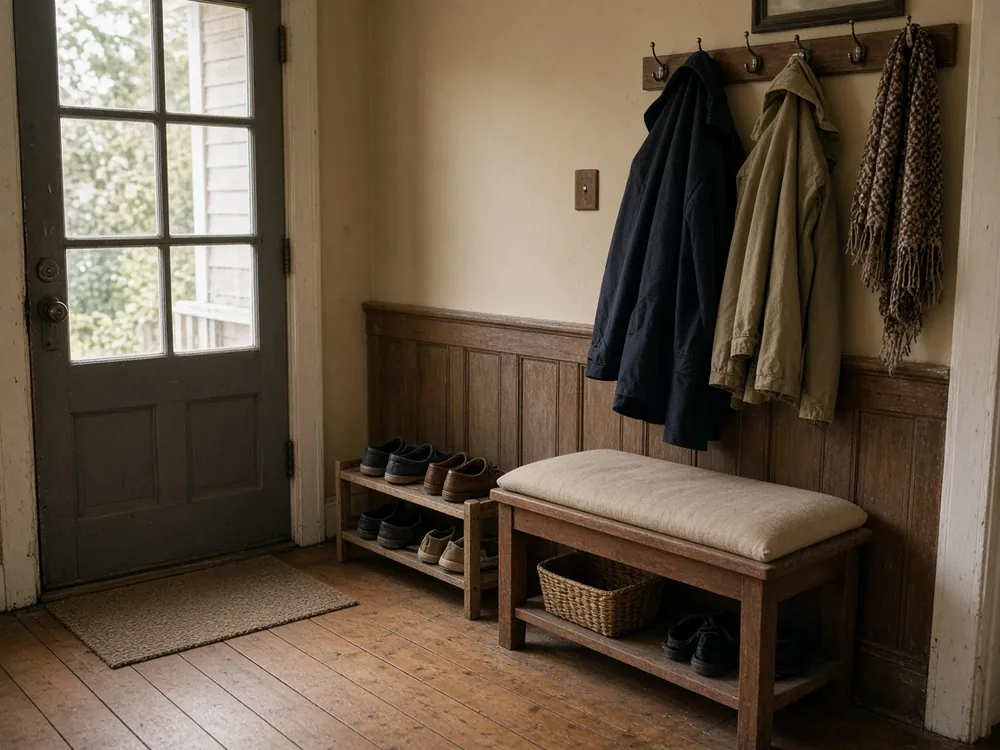
Give everything that usually ends up on the entryway floor a home: a shoe rack, hooks for coats and bags, and a shelf or bench to set things down. Add a stable seat for putting on shoes, light the entrance inside and out, secure or remove loose mats, and keep outside steps clear, non-slip and well lit. A grab bar by the door can help with balance while locking and unlocking.
The entryway is where a lot of everyday clutter collects: shoes kicked off at the door, bags dropped on the floor, a doormat that has started to curl, wet footprints on a hard floor. It is also where people are often doing two things at once — carrying shopping, finding keys, closing the door — sometimes in poor light. That makes it a common place to trip.
The CDC lists home hazards such as clutter that can be tripped over among the conditions that make falls more likely. This guide covers simple ways to set up an entrance so coming and going is easier.
1. Give shoes a home
- A low shoe rack or cubby by the door keeps shoes off the walkway. A rack at about knee to waist height saves bending to the floor.
- Agree as a household that shoes go on the rack, not in front of it. Visitors’ shoes too.
- Keep only the shoes you wear often at the door; store the rest elsewhere.
- Choose everyday shoes that fit well and stay on. The CDC lists foot pain and poor footwear as fall risk factors, and the NIA mentions backless shoes and high heels as unsafe.
2. A place to sit
Putting on or taking off shoes while standing on one foot is a balance risk. A stable bench or chair by the door, ideally with an armrest or something solid to push up from, lets people sit down to do it. A long-handled shoehorn can save bending. Leave enough clear floor space in front of the seat to stand up and turn.
3. Somewhere to put things down
Many trips happen while the hands are full. A small shelf, table or bench by the door — inside and, if possible, outside — gives somewhere to set down bags while unlocking or closing the door. The AOTA and Rebuilding Together checklist suggests creating a surface to place packages when opening the door. Hooks at shoulder height for coats, bags and keys keep them off the floor and easy to find.
4. The floor and the doormat
- Mats. Curled edges and slipping mats are common trip hazards. Use a flat, low-profile mat with a non-slip backing, or secure it with double-sided tape, as the CDC suggests for rugs. Replace mats that have started to curl.
- Wet floors. Rain and snow get tracked in. Wipe up water quickly; a mat outside the door helps catch more of it before it reaches a hard floor.
- Thresholds. A raised threshold at the door can catch a toe. The AOTA and Rebuilding Together checklist suggests beveled thresholds.
- Cords and clutter. Keep cords, umbrellas, shopping bags and pet leads off the floor.
5. Light, inside and out
- A light switch right by the door, so nobody walks into a dark hallway.
- A porch or entry light that is on when coming home after dark. The NIA suggests turning it on before leaving if you plan to return after dark. Motion-activated outdoor lights are another option.
- Enough light to see the keyhole and the steps clearly.
6. Outside steps and paths
The NIA’s advice for outdoor spaces covers the approach to the door:
- Make sure steps leading to the front door are not broken or uneven.
- Add non-slip material to outdoor stairways.
- Keep the path, porch or deck clear of leaves, branches and other debris.
- In winter, treat walkways with an ice melt product or sand.
- Consider a grab bar near the front door for balance while locking or unlocking.
The AOTA and Rebuilding Together checklist also mentions stair rails on both sides of exterior steps, repairing holes and uneven joints in walkways, and trimming bushes so the path and the view from the door stay clear.
7. Make the routine easy
- Keep keys in the same place every time, on a hook by the door, so there is no searching while standing on the step.
- If the door is heavy or the lock is stiff, have it adjusted. Lever handles are often easier than round knobs, as the AOTA checklist notes.
- Know where pets are when you open the door; the NIA reminds people not to let a cat or dog trip them.
- Carry a phone, so you are not rushing inside to answer it.
Quick entryway checklist
- Shoe rack at an easy height; shoes on it, not in front of it
- Stable seat for putting shoes on
- Shelf or bench to put bags down, inside and out
- Hooks for coats, bags and keys
- Flat, non-slip mats; no curled edges
- Light switch by the door; porch light on after dark
- Outside steps even, non-slip and clear; rails where needed
- Ice melt or sand on walkways in winter
- A grab bar by the door if balance is a concern
When to get a professional opinion
If someone has fallen at the door or on the outside steps, struggles with the steps, or is starting to avoid going out, ask their doctor about an in-home visit from a licensed occupational therapist. An OT can look at how the person uses the entrance and suggest changes, such as rails, a ramp or a different entrance. Use a licensed contractor for structural work.
Frequently asked questions
What is the easiest way to stop tripping over shoes by the door?
Give shoes a home: a shoe rack or cubby beside the door, a household habit of using it, and only the pairs you wear often kept at the entrance.
Should I have a bench in the entryway?
A stable bench or chair lets people sit down to put on and take off shoes instead of balancing on one foot. Choose one that is sturdy and easy to stand up from.
Are doormats a trip hazard?
They can be, especially if the edges curl or the mat slides. Use a flat mat with a non-slip backing, or secure it with double-sided tape, and replace mats that have started to curl.
How can I make outdoor steps safer in winter?
The NIA suggests treating walkways with ice melt or sand, adding non-slip material to outdoor steps, keeping them clear of debris, and turning on the porch light when you will be home after dark.
Does a grab bar by the front door help?
The NIA suggests considering one near the front door to help with balance while locking or unlocking the door. It should be installed securely by a qualified installer.
Sources
- CDC: Facts About Older Adult Falls
- CDC STEADI: Patient & Caregiver Resources (includes the “Check for Safety” home checklist)
- National Institute on Aging: Preventing Falls at Home: Room by Room
- National Institute on Aging: Falls and Fractures in Older Adults: Causes and Prevention
- AOTA and Rebuilding Together: Aging in Place / Safe at Home Checklist (PDF)