Daily Living · Seattle, WA
What Are Simple Ways to Make Getting Dressed Easier?

Rachel Nguyen, OTR/LNov 5, 2026 · Seattle, WA
The short answer
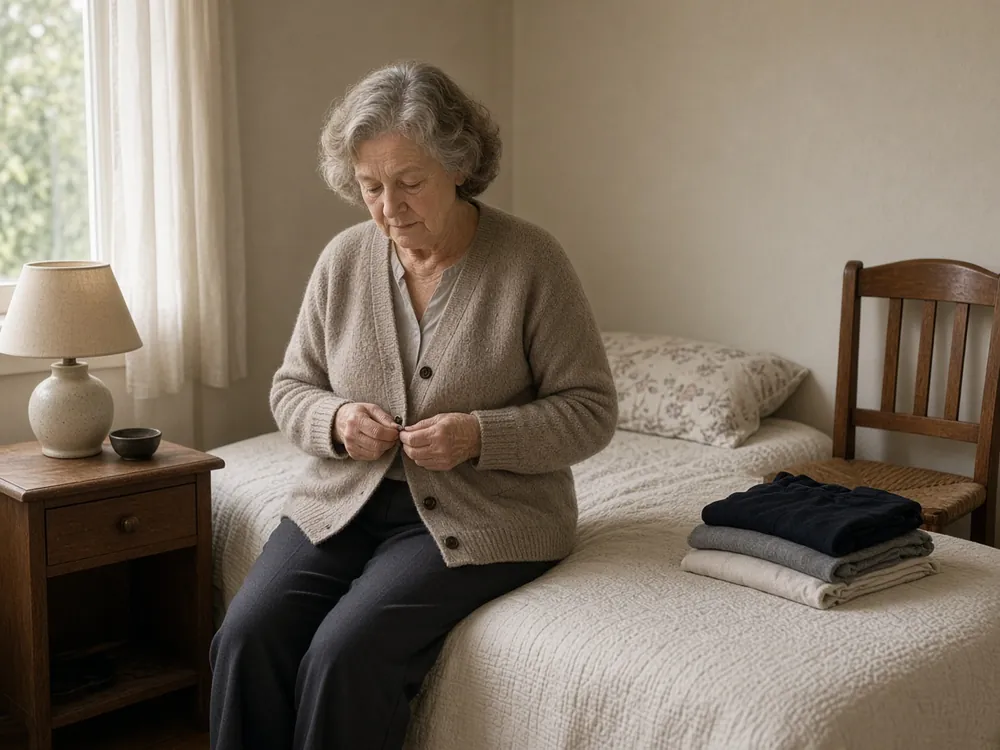
Sit down to dress, on a stable chair or the edge of a firm bed. Keep everyday clothes at waist-to-shoulder height, lay them out in the order they go on, and choose easier fastenings such as elastic waists, larger zipper pulls and slip-on or hook-and-loop shoes. Give the routine plenty of time. If dressing has become hard, ask a doctor about an occupational therapist, who can suggest techniques and tools for the specific person.
Getting dressed is one of the first everyday tasks people notice getting harder. Balancing on one leg to put on trousers, bending to reach socks, fiddling with small buttons, or reaching a high closet rail can all turn a five-minute job into a tiring one — and some of those movements carry a risk of losing balance.
Dressing is a core part of what occupational therapists work on: the National Institute on Aging (NIA) lists dressing among the “activities of daily living.” This guide covers simple changes to the setup, the clothes and the routine that often help. It is general information, not a plan for a particular person.
1. Sit down to dress
Standing on one leg to put on trousers, underwear or socks is a balance challenge for anyone. Sitting removes most of that risk.
- Use a stable chair with armrests, or the edge of a firm bed with feet flat on the floor. Avoid stools, rolling chairs and soft, low sofas.
- Put lower-body clothes on while seated, pulling them up over the knees before standing up once to finish.
- If standing up from the bed or chair is difficult, a sturdy chair with armrests or a different bed height may help. The AOTA and Rebuilding Together checklist mentions furniture risers and side bed rails as options.
2. Keep clothes at an easy height
- Move everyday clothes to drawers and shelves between waist and shoulder height. Put rarely worn items up high or down low.
- Lower the closet rail, or add a second lower rail. The AOTA checklist lists adjustable closet rods and shelving, plus a light source inside the closet.
- Make sure the closet and dresser are well lit, so dark clothes are easy to tell apart.
- Clear the floor around the dresser and closet so there is room to stand and turn.
3. Set things out in order
The NIA’s caregiving advice suggests laying clothes out in the order they go on — underwear first, then trousers, then a shirt, then a sweater. That cuts down on reaching, turning and searching, and it helps anyone who finds it hard to keep track of the steps. Many people find it easiest to set out tomorrow’s clothes the night before, when they are not rushing.
4. Choose clothes that are easier to put on
Small changes to the clothes themselves can make a big difference:
- Loose, comfortable fits with some stretch are easier to pull on than tight or stiff fabrics.
- Elastic waistbands instead of buttons and zips on trousers and skirts. The NIA mentions sweatpants and shorts with elastic waistbands as helpful.
- Larger fastenings. The NIA suggests large zipper pulls or easier fasteners instead of small buttons or buckles.
- Front-opening tops can be easier than pulling something over the head, especially with stiff shoulders.
- Shoes. The NIA suggests slip-on shoes that will not slide off, or shoes with hook-and-loop straps instead of laces. Avoid backless slippers that can slip off and cause a trip.
5. Tools that can help
There are simple dressing aids that many people find useful, such as long-handled shoehorns, sock aids, button hooks, zipper pulls and reach tools for picking up clothes from the floor. Whether a tool helps depends on the person — the right tool for stiff fingers is different from the right tool for a stiff hip. An occupational therapist can suggest which tools fit and show how to use them.
6. Give the routine enough time
- Do not rush. Rushing is when people stand on one leg, lose balance or skip a step.
- Pick a time of day when energy is better. Some people prefer to wash and dress later in the morning rather than straight out of bed.
- The NIA suggests standing up slowly, because getting up too quickly can make you feel wobbly.
- Rest between steps if needed, sitting down rather than leaning on furniture.
7. When someone is helping
If a family member or caregiver is helping, the NIA’s advice for caregivers is to let the person do as much as they can on their own for as long as possible, hand over one item at a time or give step-by-step instructions, and reduce choices — for example keeping only one or two outfits in the closet at a time. Respect privacy and let the person lead where they can.
Quick dressing checklist
- A stable seat with armrests where dressing happens
- Everyday clothes between waist and shoulder height
- Closet rail at a reachable height, with good light
- Clothes laid out in order, ideally the night before
- Elastic waists, larger zipper pulls, front-opening tops
- Slip-on shoes that stay on, or hook-and-loop straps
- Clear floor space to stand and turn
- Plenty of time, and standing up slowly
When to get a professional opinion
Ask the person’s doctor about an occupational therapist if dressing has become noticeably harder, takes much longer, causes pain, or involves near-falls; if the person has started wearing the same clothes to avoid changing; or after an illness, injury or hospital stay. A licensed occupational therapist can look at how the person dresses and suggest techniques, tools and changes to the room.
Frequently asked questions
Should older adults sit down to get dressed?
Sitting on a stable chair or the edge of a firm bed avoids balancing on one leg while putting on trousers, underwear or socks, which many people find makes dressing easier and steadier.
What kinds of clothes are easier to put on?
Loose, comfortable clothes with elastic waistbands, larger zipper pulls instead of small buttons, front-opening tops, and slip-on or hook-and-loop shoes that stay on securely. The NIA mentions several of these in its caregiving advice.
What are dressing aids?
Simple tools such as long-handled shoehorns, sock aids, button hooks and reach tools. An occupational therapist can suggest which ones suit a particular person and show how to use them.
How can I help a parent get dressed without taking over?
The NIA suggests letting the person dress on their own for as long as they can, handing over one item at a time or giving step-by-step instructions, and reducing the number of choices.
When should we ask for an occupational therapist?
When dressing has become noticeably harder, slower or painful, involves near-falls, or after an illness or hospital stay. Ask the person’s doctor about a referral.
Sources
- National Institute on Aging: Alzheimer’s Caregiving: Bathing, Dressing, and Grooming
- National Institute on Aging: Aging in Place: Growing Older at Home
- National Institute on Aging: Falls and Fractures in Older Adults: Causes and Prevention
- AOTA and Rebuilding Together: Aging in Place / Safe at Home Checklist (PDF)