The short answer
Most bathroom safety plans start with the same few things: grab bars that are properly anchored next to the toilet and in and beside the tub or shower, non-slip mats or strips on every surface that gets wet, a light that is easy to find at night, and a seat where standing is tiring. An occupational therapist can help match the changes to how the person actually bathes and uses the toilet.
The bathroom packs a lot of risk into a small space: hard surfaces, wet floors, and movements like stepping over a tub edge or standing up from a low toilet. It is also a room people use alone, often at night. That combination is why home-safety checklists from the CDC, the National Institute on Aging (NIA) and the American Occupational Therapy Association (AOTA) all give the bathroom its own section.
This guide covers the common changes, what to watch out for when making them, and how to think about the person who uses the room — which is where an occupational therapist’s view helps most.
1. Grab bars, installed properly
The NIA suggests mounting grab bars near the toilet and on both the inside and outside of the tub and shower. The CDC checklist says the same: next to and inside the tub, and next to the toilet.
- A towel bar is not a grab bar. Towel rails and soap dishes are not built to take a person’s weight and can pull out of the wall.
- Anchoring matters. A grab bar needs to be fixed into something solid behind the wall. If you are not sure what is behind the tile, use a qualified installer.
- Placement follows the movement. Think about where the hand naturally goes when stepping into the tub, lowering onto the toilet, or turning around in the shower. That is where a bar is useful.
- Suction-cup bars are sold widely, but they depend on the seal staying perfect. Treat them with caution and do not rely on one to hold full body weight.
2. Non-slip surfaces everywhere that gets wet
- Put a non-slip rubber mat or self-stick strips on the floor of the tub or shower, as the CDC suggests.
- Use non-skid mats or strips on any floor area that may get wet, per the NIA.
- Secure bath mats outside the tub so they cannot slide. AOTA’s checklist with Rebuilding Together suggests non-slip, double-sided rug tape.
- Avoid bath oils and anything else that makes the tub slippery.
- Wipe up water on the floor straight away, and keep a towel within reach of the shower.
3. Light for night-time trips
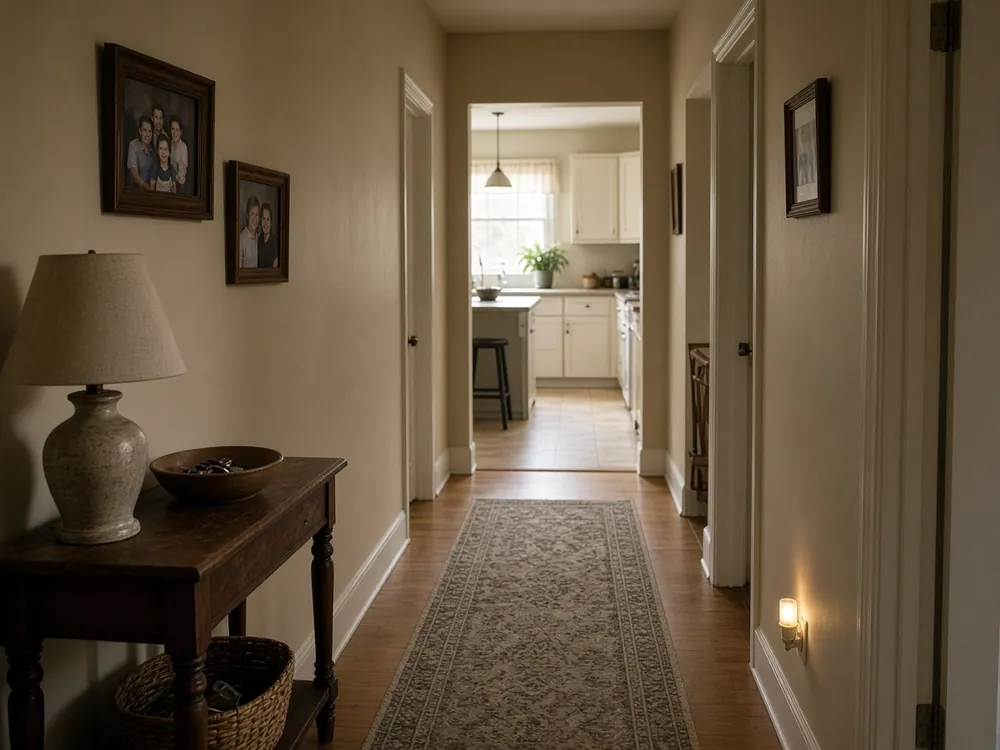
Many bathroom trips happen in the middle of the night, half-awake. The NIA suggests leaving a light on in the bathroom at night or using a night light that comes on automatically in the dark. Light the path from the bed to the bathroom too, so nobody is feeling their way along a wall.
4. Sitting instead of standing
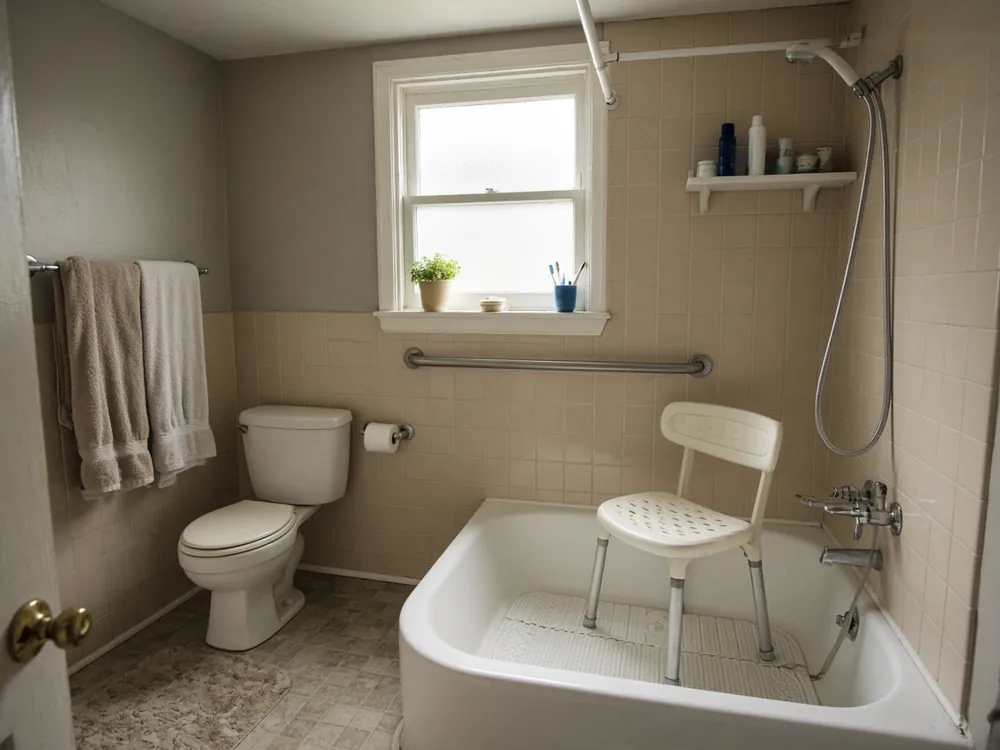
- A shower or bath seat lets someone wash without balancing on one foot or standing for a long time. Seats come in different designs, including transfer benches that sit across the tub edge so the person can sit down outside the tub and slide across.
- A hand-held shower head on an adjustable mount, listed in the AOTA and Rebuilding Together checklist, makes washing from a seat much easier.
- Toilet height. A low toilet can be hard to stand up from. The same checklist mentions options such as a raised seat or raising the toilet. A grab bar or a toilet frame can also help with the movement.
- Somewhere to sit while drying and dressing — a stable chair, not a wobbly stool — saves balancing on a wet floor.
Equipment is only helpful if it is the right type and size for the person and the space. This is a good moment to involve an occupational therapist, who can recommend equipment and show the person how to use it safely.
5. Hot water and other details
- Know how hot your water gets, and take care with scalding, especially for anyone with reduced feeling in their hands or feet. The AOTA checklist suggests insulating exposed hot-water pipes and using pressure-balanced, temperature-regulated lever faucets.
- Lever handles are often easier to use than round knobs for people with sore or stiff hands.
- Keep toiletries within easy reach so nobody has to bend low or stretch while standing in the shower.
- Think about the door. If a person fell against a door that opens inwards, it could be hard to get in to help. Some households change the door swing or use a lock that can be opened from outside.
- Keep a phone within reach, or wear a device that can call for help. The NIA describes options such as emergency response buttons and smartwatches that can call for help.
6. Bigger changes
For some homes, the long-term answer is a bigger remodel, such as a curbless (walk-in) shower or a wider doorway. AOTA’s checklist mentions a shower with no threshold where bathing abilities are severely limited, and a doorway width of at least 32 inches for access. These are big decisions with real costs. They are worth planning with the person, their family and an occupational therapist, and carrying out with a licensed contractor.
Quick bathroom safety checklist
- Grab bars by the toilet and in and beside the tub or shower, properly anchored
- Non-slip mat or strips in the tub or shower
- Bath mats that cannot slide
- Night light in the bathroom and along the route to it
- A seat for showering or bathing, if standing is tiring or unsteady
- Hand-held shower head within reach of the seat
- Toilet height that is comfortable to stand up from
- Toiletries within easy reach
- Water temperature checked; exposed hot pipes covered
- A way to call for help from the bathroom
When to get a professional opinion
Ask the person’s doctor about an occupational therapy home visit if they have fallen in the bathroom, need help getting in and out of the tub, have started avoiding bathing, or are hesitant to use the toilet at night. A licensed occupational therapist can look at how the person moves in that room and suggest specific equipment and changes. Use a licensed contractor or plumber for installation. If someone is hurt or in danger, call emergency services.
Frequently asked questions
Where should grab bars go in a bathroom?
Public checklists from the CDC and NIA suggest next to the toilet and both inside and outside the tub or shower. The exact positions depend on how the person moves, which is why an occupational therapist’s input is useful before drilling holes.
Can I use a towel bar as a grab bar?
No. Towel bars are not designed to hold a person’s weight and can come away from the wall. Use a grab bar that is properly anchored to solid support.
Is a shower chair or a transfer bench better?
It depends on the person and the bathroom. A shower chair suits a walk-in shower; a transfer bench lets someone sit outside the tub and slide across. An occupational therapist can help choose the right type and size.
Are suction-cup grab bars safe?
They depend on a perfect seal and can let go. Do not rely on one to hold full body weight. A properly installed grab bar is the safer choice.
Do we need to remodel the whole bathroom?
Usually not to begin with. Grab bars, non-slip surfaces, lighting and a seat are the common first steps. Bigger changes, such as a curbless shower, are worth planning with an occupational therapist and a licensed contractor.
Sources
- CDC STEADI: Patient & Caregiver Resources (includes the “Check for Safety” home checklist)
- National Institute on Aging: Preventing Falls at Home: Room by Room
- National Institute on Aging: Alzheimer’s Caregiving: Bathing, Dressing, and Grooming
- AOTA and Rebuilding Together: Aging in Place / Safe at Home Checklist (PDF)