Home Safety · Austin, TX
Easy Home Safety Updates That Make a Big Difference

Emily Carter, OTR/LNov 1, 2026 · Austin, TX
The short answer
The updates most public checklists start with are simple and often low-cost: better lighting, especially at night; clear walkways with no loose rugs or cords; everyday items moved to waist height; a lamp and phone within reach of the bed; and non-slip surfaces in the bathroom. Fix anything loose or broken first, then work room by room.
Making a home safer does not have to start with a remodel. The National Institute on Aging (NIA) suggests going through the home room by room, correcting immediate dangers such as loose stair railings and poor lighting first, and then working on the rest. This guide follows that order and focuses on updates that are simple, quick and usually inexpensive.
It is written with Austin-area homes in mind, where many houses are single-story, but almost all of it applies anywhere.
Step one: fix what is loose or broken
Before buying anything new, walk the house and look for things that are already failing:
- Handrails that move when you pull on them
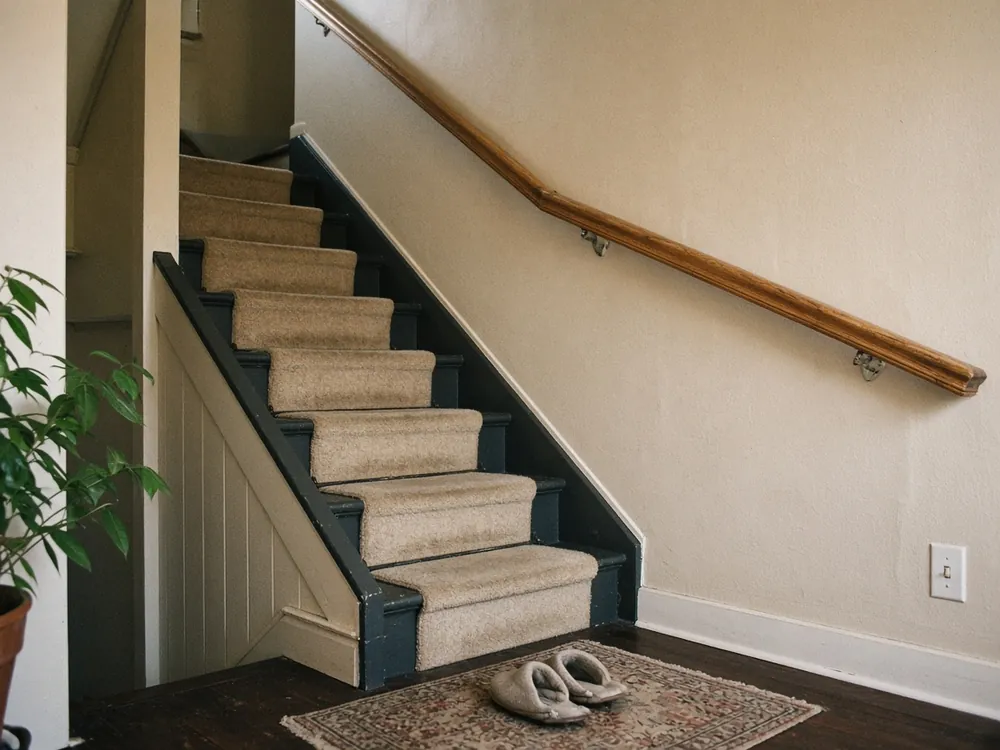
- Steps — indoors or out — that are broken, uneven or rocking
- Carpet that is loose, torn or lifting at the edges
- Burned-out bulbs, especially on stairs, in hallways and at entrances
- Thresholds or floor transitions that stick up
These are the hazards people stop noticing because they have lived with them for years. They are also the ones most likely to catch someone out.
Lighting: the most useful low-cost update
- Put a lamp close to the bed where it is easy to reach, as the CDC’s home checklist suggests.
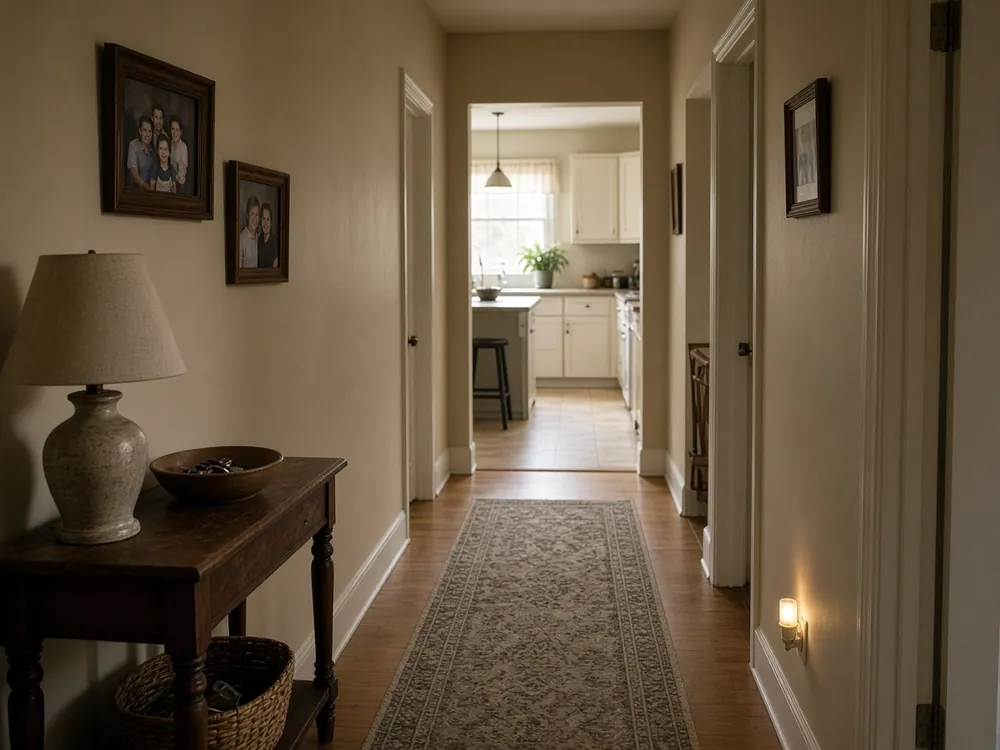
- Light the route from the bedroom to the bathroom with night lights. Some turn on by themselves after dark.
- Make sure there is a switch at both ends of hallways and stairs, and at the entrance to each room, so nobody walks into a dark room to find a lamp.
- Add task lighting where close work happens — over the kitchen counter and the stove, for example. The AOTA and Rebuilding Together checklist lists this for kitchens.
- Turn the porch light on when you will be home after dark.
- Keep a flashlight by the bed in case the power goes out, as the NIA suggests.
Floors and walkways: clear paths
- Throw rugs. The NIA recommends not using throw rugs or small area rugs. If a rug stays, the CDC suggests double-sided tape or a non-slip backing so it cannot slide.
- Cords. Coil or tape cords next to the wall so they are not in walking paths. If there are not enough outlets, have an electrician add one rather than running extension cords across the floor.
- Furniture. Arrange furniture, especially low coffee tables, so the main routes through each room are wide and clear.
- Clutter. Keep papers, shoes, books and bags off the floor and off the stairs.
- Pets. The NIA reminds people to know where their cat or dog is when standing or walking.
- Wet floors. Do not walk on freshly washed floors, and clean up spills straight away.
Reach: bring everyday things down to waist height
A lot of risky moments come from reaching: climbing on a chair to get a dish, or bending low to a bottom cupboard.
- Move the things you use every day to shelves at about waist height, as the CDC suggests.
- Never use a chair as a step stool. If you need a step stool, use a steady one with a bar to hold on to.
- A reach tool (sometimes called a reacher or grabber) can pick up light items from high shelves or the floor. The NIA mentions these as an alternative to climbing.
- Pull-out shelves in lower cabinets, mentioned in the AOTA and Rebuilding Together checklist, mean less bending and kneeling.
The bathroom: small changes with a big role
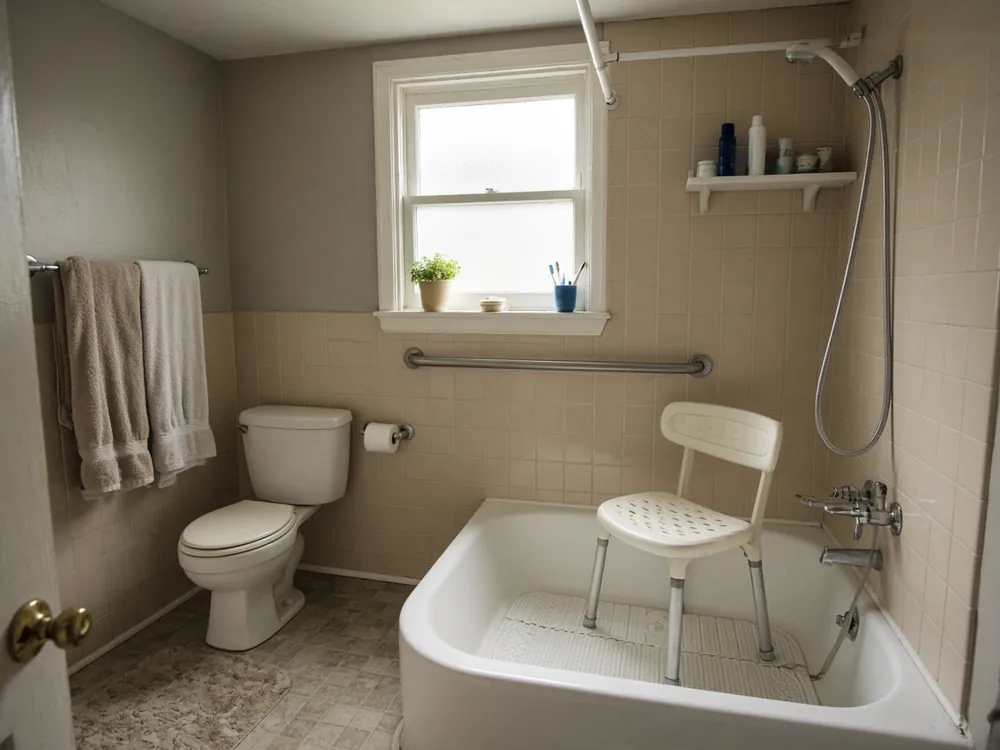
The bathroom deserves its own guide (see How Can I Make My Bathroom Safer?), but the quick updates are: a non-slip mat or strips in the tub or shower, bath mats that cannot slide, a night light, and grab bars next to the toilet and in and beside the tub or shower. Grab bars need to be properly anchored, so they are usually a job for a qualified installer.
The bedroom: getting up safely at night
- A lamp or switch you can reach before getting out of bed
- A clear path from the bed to the door and to the bathroom
- A charged phone within reach of the bed, as the NIA suggests
- A bed and chairs at a height that are easy to get in and out of
Entrances: steps, light and a place to put things down
Many single-story homes still have a step or two at the front door, the back door or into the garage. Check those steps for light, rails and a firm surface. A small shelf or bench by the door gives somewhere to put down bags while unlocking, and the NIA suggests a grab bar near the front door for balance while locking and unlocking. For more ideas, see How Do I Keep My Entryway Free of Trip Hazards?
Getting help if you fall
Updates are not only about preventing falls; they are also about getting help quickly if one happens. Keep a phone on you as you move around the house, keep emergency numbers easy to find, and think about whether an emergency response button or a smartwatch that can call for help would suit the person. The NIA describes these options.
Quick list: easy updates to start this week
- Fix loose rails, broken steps and lifting carpet
- Replace every burned-out bulb
- Night lights from the bedroom to the bathroom
- Lamp and phone within reach of the bed
- Remove or secure throw rugs
- Move cords out of walkways
- Clear the main routes through each room
- Everyday items at waist height; a steady step stool with a handle
- Non-slip mat or strips in the tub or shower
- Porch light on when coming home after dark
When to get a professional opinion
A checklist is a good start, but it is not an assessment. If someone has fallen, is unsteady, or is finding everyday tasks harder, ask their doctor about an in-home visit from a licensed occupational therapist, who can look at the person and the home together. Use licensed trades for electrical work and installations.
The NIA notes that it may not be necessary to make every suggested change, but it is important to look at home safety again from time to time as needs change. If cost is a concern, the NIA suggests checking with your state housing finance agency, local social services or community development groups for help paying for repairs, and your local Area Agency on Aging can tell you about programs nearby. The Eldercare Locator can help you find yours.
Frequently asked questions
What is the first home safety update to make?
Fix anything that is already loose or broken, such as wobbly handrails, uneven steps or lifting carpet, and replace burned-out bulbs. The NIA suggests correcting immediate dangers like these first.
Are throw rugs really a problem?
They are a common trip hazard. The NIA recommends not using throw rugs or small area rugs. If you keep one, the CDC suggests securing it with double-sided tape or a non-slip backing.
Do these updates have to be expensive?
Many are not. Night lights, moving items to waist height, securing rugs and clearing walkways cost little. Bigger jobs such as grab bars or new rails may need a qualified installer.
Is there help paying for home safety changes?
There may be. The NIA suggests checking with your state housing finance agency, social services department and community development groups. Your local Area Agency on Aging, which you can find through the Eldercare Locator, can point to programs near you.
Do I need an occupational therapist for these changes?
Not for simple updates. An OT is most useful when someone has fallen, feels unsteady, or is struggling with daily tasks, because they can match changes to the person and not just the house. Ask the person’s doctor about a referral.
Sources
- CDC STEADI: Patient & Caregiver Resources (includes the “Check for Safety” home checklist)
- National Institute on Aging: Preventing Falls at Home: Room by Room
- National Institute on Aging: Aging in Place: Growing Older at Home
- AOTA and Rebuilding Together: Aging in Place / Safe at Home Checklist (PDF)
- Eldercare Locator (U.S. Administration for Community Living)